.svg "wisetack financing") NEW! We offer financing. Prequalify today and contact us to learn more about financing your next project!
NEW! We offer financing. Prequalify today and contact us to learn more about financing your next project!
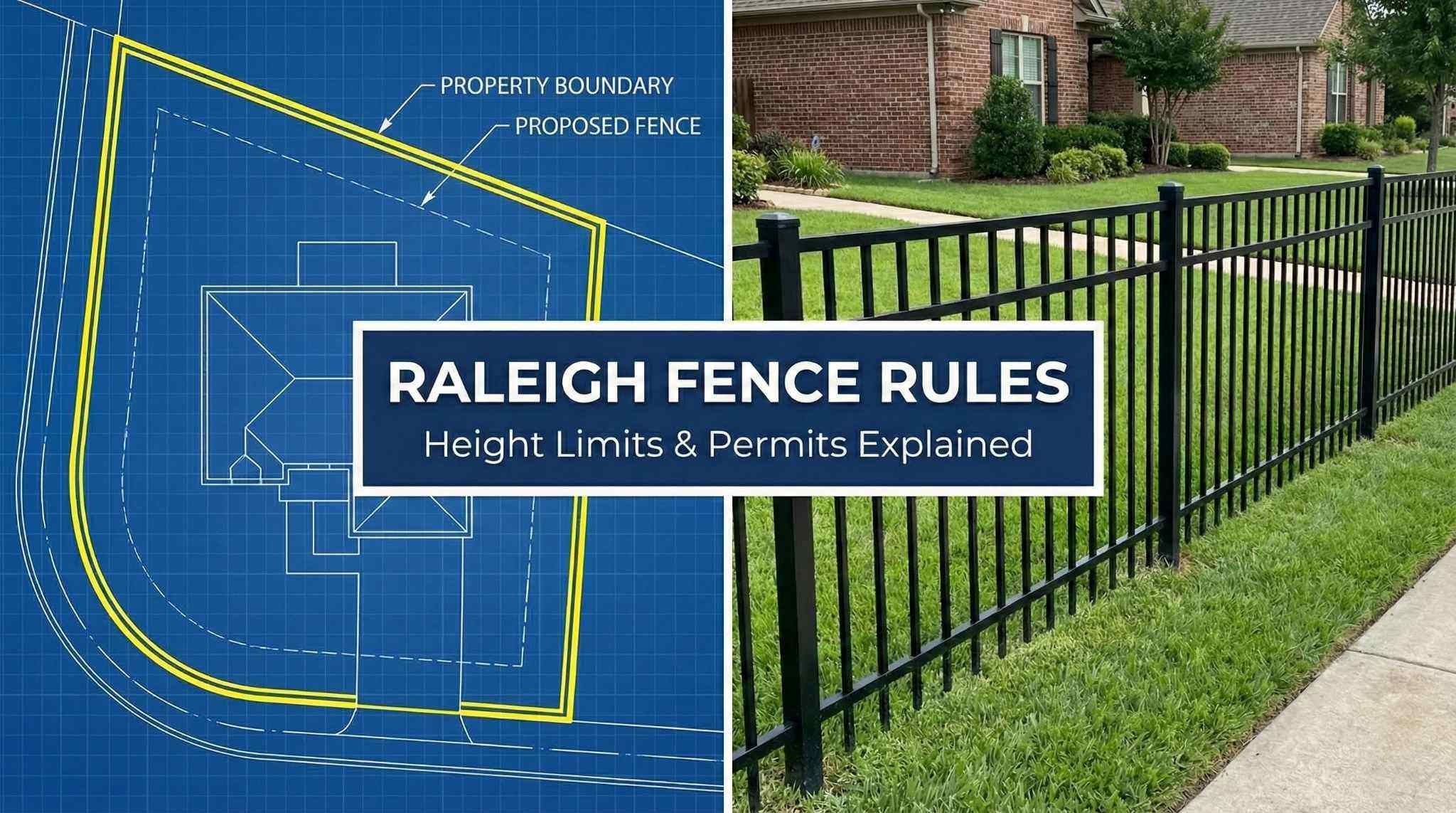
Building a fence in Raleigh isn’t as simple as digging a few holes and nailing up boards. Whether you live in a historic bungalow in Oakwood or a new build in Brier Creek, the City of Raleigh Unified Development Ordinance (UDO) has specific rules about height, location, and materials.
If you ignore them, you risk code violations, fines, or—worst of all—being forced to tear your new fence down.
At Dickerson Fencing, we have been navigating these regulations since 1960. We wrote this guide to help Raleigh homeowners understand what is required before the first post goes in the ground.
1. Do I Need a Fence Permit in Raleigh?
Yes. In almost all cases, you need a zoning permit to install a fence in Raleigh.
As of 2025, the permitting process has become more rigorous. The city now typically requires a site plan survey with your application. This ensures your fence doesn’t encroach on:
-
Public right-of-ways (sidewalks/streets).
-
Utility easements (sewer/power lines).
-
Your neighbor’s property line.
Pro Tip: If you hire Dickerson Fencing, we assist with the permitting process so you don’t have to navigate City Hall alone.
2. Height Limits: The Magic Numbers
The most common violation we see is fence height. The rules change depending on where the fence is located on your property:
-
Backyards (Rear Yards): You can generally build up to 8 feet tall. This is perfect for our custom wood privacy fences.
-
Front Yards: Fences in the front yard are strictly limited. They typically cannot exceed 42 inches (3.5 feet) to 4 feet, depending on your specific zoning district.
-
Corner Lots: This is where it gets tricky. If you are on a corner, you have two street frontages. The city often treats the side yard facing the street as a “secondary front yard,” which may restrict your fence height or require it to be set back significantly from the sidewalk.
3. Material Restrictions
Raleigh’s UDO cares about how your fence looks, specifically regarding “opacity” (how much light passes through).
-
No Chain Link in Front: You generally cannot install chain link fencing in a front yard in residential districts.
-
Historic Districts: If you live in a Historic Overlay District (like Oakwood, Boylan Heights, or Prince Hall), you need a Certificate of Appropriateness (COA) from the Raleigh Historic Development Commission (RHDC). They often require specific wood styles or ornamental aluminum that mimics historic wrought iron.
4. The “Good Neighbor” Rule
While not strictly a law in every municipality, it is standard practice (and often an HOA rule) to face the “finished” side of the fence outward toward your neighbors and the street. This is called the “Good Neighbor” style.
5. Dealing with Raleigh’s Red Clay
Codes aren’t the only challenge; the soil is too. Raleigh is famous for dense, heavy red clay.
-
The Risk: If posts aren’t set deep enough with the proper concrete mix, the clay can push them out of alignment during freeze-thaw cycles.
-
The Solution: We dig deep and use a specific concrete footing mix designed to grip the clay, ensuring your fence stands straight for decades.
Summary: Do It Right the First Time
Navigating the UDO, finding your property pins, and digging through red clay is hard work. Don’t risk a code violation with a DIY project or an unlicensed handyman.
Dickerson Fencing knows every inch of Raleigh’s code book. We handle the heavy lifting—and the paperwork—so you can enjoy your backyard in peace.
Click here to request a free estimate or call us at (919) 596-6765.